
Homeowners in Ocean County and Monmouth County ask for clear, local guidance on garage door insulation, noise, and durability.
Surfside Garage Doors installs and services insulated garage doors and non-insulated garage doors across the Jersey Shore.
The Shore Climate and Why it Matters
Our area sees extreme temperatures from winter cold snaps to humid summer heat, plus salt air and onshore winds. That combination drives outside temperatures into your garage and can push up energy costs for attached garages.
An insulated garage reduces heat transfer from the outside air to the living space over or beside the garage, making a big difference in day-to-day comfort. You’ll also gain noise reduction from traffic, leaf blowers, and storms that rattle thin, single-layer doors.
How R-Value is Measured and What it Means
R value is a measure of thermal resistance; higher R values slow heat transfer through the door sections. Insulated garage doors typically use foam cores as the insulation: polystyrene or polyurethane. Polystyrene panels are rigid sheets that are fitted into the door; polyurethane expands to fill the cavity and bonds to the skins.
Polyurethane often delivers higher R values for the same thickness and adds strength to the panel, which helps the door operate quietly with fewer vibrations. R-values are generally listed per model; our team brings spec sheets so you can compare insulation apples to apples.
Construction: Layers, Materials, and Hardware
An insulated garage door is usually a two- or three-layer design. A two-layer door pairs a steel skin with polystyrene; a three-layer door sandwiches polyurethane foam between interior and exterior steel skins.
More layers add rigidity, which reduces flex and sound. Hinges, rollers, struts, and other hardware support the added strength so the door can open and close smoothly without shaking the entire garage. Coastal homes also benefit from corrosion-resistant materials and tight perimeter seals; that combination keeps out salty spray and sand that grind down components over the years.
Polystyrene vs. Polyurethane: Which Insulated Door Fits Your Goals
Polystyrene is a solid value choice for detached spaces or for buyers focused on a modest upgrade. It improves comfort and helps with sound at a lower purchase price. Polyurethane raises performance; the foam fills voids and bonds to the skins, increasing strength, reducing noise, and boosting thermal numbers.
If your garage shares a wall with a bedroom or you run a workshop or gym in the space, polyurethane paired with quality hinges and nylon rollers is often the best option.
Noise Reduction and Daily Comfort
Insulated doors are noticeably quieter because the foam core dampens vibrations, the added mass reduces drumming from wind, and better hardware keeps the door aligned.
Pair an insulated garage door with a belt-drive or wall-mount opener and you’ll hear the difference from the first cycle.
For attached garages, less noise and more stable temperature mean easier mornings and fewer complaints from rooms above the garage.

Windows, Styles, and Curb Appeal
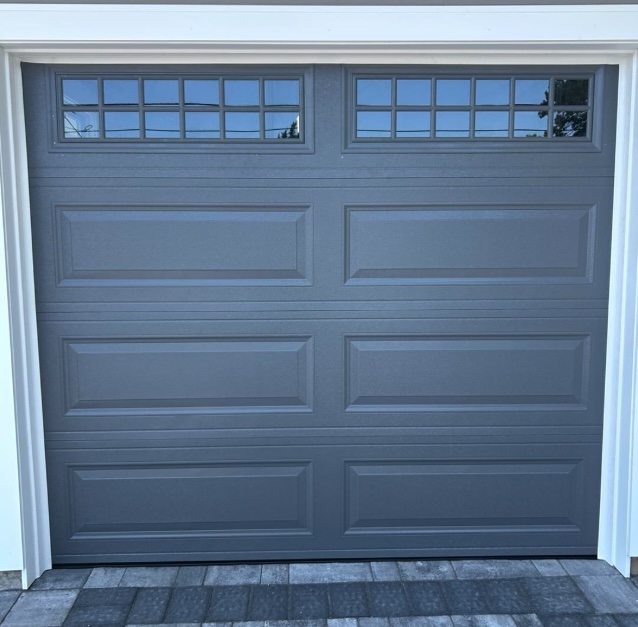
Insulated garage doors do not force you into a single look. Carriage designs, modern planks, flush panels, and raised panels all come with insulation. You can add windows for daylight and curb appeal; insulated glass is available to keep performance gains intact.
Popular colors across the Shore include black, deep charcoal, and classic whites that contrast nicely with trim. We’ll bring color chips and glass options to your driveway so you can judge style and quality in natural light.
Non-Insulated Garage Doors: When They Still Make Sense
A single-layer steel door can be a reasonable choice for a detached garage used for storage, or for a budget-first project that will be upgraded later. It is lighter, uses fewer materials, and costs less up front.
The trade-off is more sound and more heat transfer. In warm climates you might not feel the winter penalty, but in Ocean and Monmouth County the winter-to-spring swings and nor’easters make insulation a practical upgrade for comfort and durability.
Perimeter Sealing and Installation Details that Affect Performance
Even the highest R value won’t deliver results if the installation ignores gaps. Our crews size springs correctly so the door is balanced, align tracks to prevent scraping, use durable bottom seals, replace worn side seals, and cap wood fascia with aluminum capping on request to protect exposed edges.
Weatherstripping that actually contacts the door along the full swing arc stops outside air and driven rain. These small details increase comfort and reduce energy bills in a measurable way.
Durability, Strength, and Long-Term Costs
Insulated garage doors often outlast basic hollow models because the foam core and inner steel skin resist dents and keep the sections from oil-canning. That strength protects finishes and keeps hardware tighter over time.
You’ll generally maintain the system less aggressively, and the opener won’t work as hard because a balanced insulated door moves smoothly. Over a span of years, those factors lower costs and keep the door operating like new.
How to Choose an Insulated Garage Door for Ocean and Monmouth County
Start with use: attached garages with frequent access benefit most from insulation and noise reduction. Next, look at exposure: bays that face onshore winds or busy streets gain from higher R values and polyurethane cores. Then pick style and windows to fit the home’s architecture and curb appeal goals.
Finally, match the opener to the installation. Belt-drive units and wall-mount openers clear headroom for storage and reduce transmitted sound into living spaces. Our team will size the springs, select hardware, and set travel and force limits so the system runs safely from day one.
Smart Access and Small Tech Notes
Modern openers add convenience: app control, LEDs, cameras, and battery backup. If you use LiftMaster myQ, the app will ask for permission to access notifications and your home network; those features make it easier to confirm the door is closed after you leave.
Data travels over secure http connections to a cloud server, and we’ll help you link phones and keypads for the whole household. Reliable access matters as much as insulation, since the door is the largest moving entry on the house.
What to Expect During an On-Site Consult
We measure the opening, check framing, discuss insulation goals, and show you sections from Amarr, Haas, and Fimbel so you can compare construction and finishes. You’ll see how polyurethane and polystyrene foam differ in strength, how windows change light and privacy, and how hardware choices affect sound.
We also look at the space above the car: ceiling racks, lifts, and garage screens influence door and opener design. After a clear written quote, installation is scheduled, old doors are removed, and the new door is balanced and tested for safety. You get maintenance tips to keep the system quiet and resistant to the elements.
Planning Upgrades for Energy and Comfort
Insulation is part of a larger plan for comfort. Add weatherstripping and bottom seals, tune the opener annually, and consider door screens for seasonal airflow without bugs. These steps protect materials, keep out grit, and help maintain temperature.
For Ocean County homes near the water, aluminum capping on exterior trim and stainless or coated hardware extend life in salty air.
Cost, Value, and the Long View
Insulated garage doors cost more up front than single-skin options, but they offer clear benefits you can feel. Reduced noise, lower energy bills in attached spaces, better strength, and longer finish life contribute to value over years of use.
Combined with an opener that fits the installation, you’ll gain a smoother, quieter, more durable system that looks good from the street and works the way a modern garage should.
Key Takeaways for Shore Homeowners
Insulated doors slow heat transfer and cut noise; higher R values, polyurethane cores, and quality hardware raise performance. Non insulated garage doors can suffice for detached buildings focused on storage.
For attached garages in Ocean and Monmouth County, insulation, tight seals, and a correctly matched opener deliver comfort and confidence through storms, cold snaps, and summer heat. The right choice depends on your space, how you use it, and the design you want on the front of your home.