
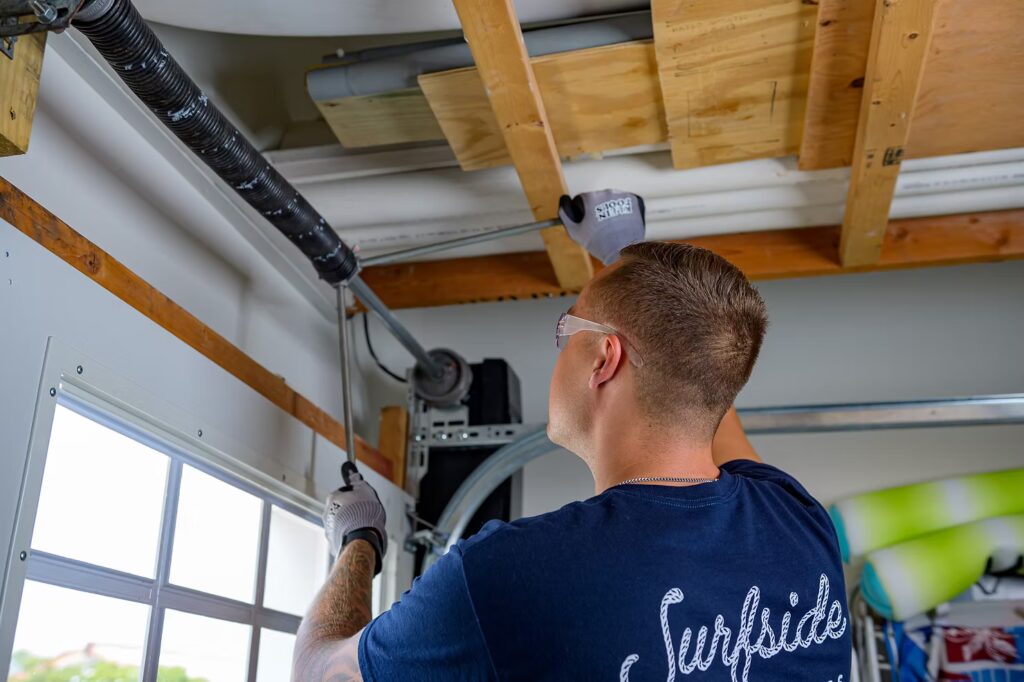
A broken garage door spring is one of the most common calls we get at Surfside Garage Doors.
It is also one of the most misunderstood repairs a homeowner can attempt. Springs look simple. They are not. Understanding how they work, and why professional handling matters, protects your home and your safety.
At Surfside Garage Doors, we believe it’s vital to understand the risks associated with garage door springs and why attempting to replace them yourself can lead to serious consequences.
How Garage Door Springs Work
Garage door springs carry the full weight of the door. They store enormous mechanical energy so the door can lift and lower smoothly. Two main types are used on residential doors today.
Torsion Springs
Torsion springs sit above the door on a metal shaft. They twist to create lifting force, and that twisting motion holds tremendous tension at all times. A torsion spring under load can release its full energy in a fraction of a second if it fails.
Extension Springs
Extension springs run along the horizontal tracks on either side of the door. They stretch and contract as the door moves. They carry less visible tension than torsion springs, but a snapped extension spring can still send metal coils flying with real force.
Why Salt Air and Coastal Weather Add Extra Risk
Homes near the water face a faster wear cycle on garage door hardware. Salt air speeds up corrosion on spring coils, cables, and mounting hardware. A spring weakened by rust can fail without warning, even if it looks intact from the ground. This coastal factor is one reason we recommend annual inspections for homes throughout our service area, rather than waiting for a visible problem.
The Real Dangers of DIY Spring Replacement
Online videos make spring replacement look manageable with basic tools. The reality on site is different, and the risks are serious.
High Tension Injuries
A spring under tension behaves like a loaded mechanism. Winding or unwinding it without the correct winding bars and technique can cause the spring to snap free. Injuries from this kind of failure range from deep cuts to broken bones.
Wrong Tools, Wrong Results
Professional technicians use winding bars, tension gauges, and vice grips sized specifically for garage door work. Household tools are rarely a safe substitute. Using the wrong tool increases the chance the spring slips during adjustment.
Voided Warranties and Bigger Bills
Most manufacturers void the hardware warranty if a spring is installed or adjusted by someone without certification. A failed DIY attempt often turns a moderate repair bill into a full opener or track replacement.
Warning Signs Your Springs Need Attention
Springs rarely fail without any warning. Watch for a door that feels heavier than usual when lifted by hand, visible gaps in the coil, or a loud bang from the garage. Our guide to early garage door warning signs covers the full list of red flags worth acting on quickly.
What a Professional Spring Replacement Looks Like
Paul Sharpe, owner of Surfside Garage Doors, brings a safety-first mindset to every job, shaped in part by his work as a volunteer firefighter in Toms River. That background shows in how our technicians approach high-tension repairs.
A proper spring replacement starts with securing the door so it cannot shift during the repair. The technician measures the door for the correct spring size and wire gauge, since an incorrectly sized spring throws off balance and shortens the life of the opener. Both springs are typically replaced together, even if only one has failed, because the second is usually close behind on wear.
Once installed, the door is tested for balance, checked at multiple points along the track, and the opener force settings are verified before the job is complete.
When to Call Surfside Garage Doors
A broken or failing spring is not a project to handle alone. Our team carries stocked trucks with the correct springs, cables, and tools to complete most garage door repairs in one visit. If your spring fails outside normal hours, our emergency repair service is available around the clock across Ocean and Monmouth County.